Kenya

Overview
Kenya’s tax stamp programme started in 2003 as a way to address significant revenue losses, initially in tobacco. At the time the Kenya Revenue Authority (KRA) was collecting less than 50% of its target tobacco revenue. This was because all of the tobacco companies operating at the time, as well as importers, had developed schemes to avoid paying taxes. The programme was expanded to wines and spirits in 2007.
In 2013, Kenya introduced its Excisable Goods Management System (EGMS), provided by SICPA, which included multilevel security tax stamps and remote automated monitoring of domestic production lines.
In 2016, …
Kenya’s tax stamp programme started in 2003 as a way to address significant revenue losses, initially in tobacco. At the time the Kenya Revenue Authority (KRA) was collecting less than 50% of its target tobacco revenue. This was because all of the tobacco companies operating at the time, as well as importers, had developed schemes to avoid paying taxes. The programme was expanded to wines and spirits in 2007.
In 2013, Kenya introduced its Excisable Goods Management System (EGMS), provided by SICPA, which included multilevel security tax stamps and remote automated monitoring of domestic production lines.
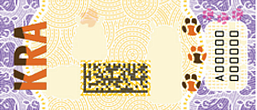
In 2016, the secure, serialised stamps were upgraded with QR codes for all imported and domestic cigarettes, as well as wine, spirits, ready-to-drink alcoholic beverages and beer, in order to enable distributors, retailers and consumers to authenticate the legitimacy of these products using a smartphone.
Kenya was recognised by the World Bank for its anti-illicit tobacco trade measures, in a report released in 2018 called Confronting Illicit Tobacco Trade: A Global Review of Country Experiences. The review includes 20 case studies encompassing more than 30 countries worldwide and identifies Kenya as one of the countries to have made the greatest strides in controlling illicit tobacco, by implementing measures such as product traceability systems.
The review states that following its introduction in 2013, the EGMS rapidly led to an increase in the size of the legitimate cigarette market, with the largest increase coming from imported cigarettes, which rose by an incredible 4,728% in 2014.
Furthermore, the Kenya National Bureau of Statistics reported a 76% increase in legitimate cigarette and cigar sales from 2013-2016, which was attributed to improved tax administration processes. In 2016-17, excise tax revenues on beer and tobacco grew again by 13.3%, while revenue on spirits grew by 22.7%. The KRA attributes this growth to enhanced compliance arising from the EGMS.
Given this favourable performance, the EGMS was expanded in 2019, to include bottled water, juice, soda, energy drinks and other non-alcoholic beverages. For these product categories the fiscal marks consist of a secure mark, ie. a 2D barcode that is printed directly on the product packaging using proprietary security ink in order to allow authentication and prevent duplication. As a result of the EGMS implementation, the number of registered companies grew significantly; for example, the number of manufacturers and importers of bottled water increased by 286%.
In addition to using serialised secure tax stamps and secure marks, the EGMS system integrates track and trace functionality and automated production monitoring, which involves the following steps:
- Individual product counting and detection of the product SKU through a barcode scanner reading the product EAN code
- Individual scanning and authentication of the stamp or mark by an inline camera
- Association of the stamp/mark to the product SKU and transmission to the central database
The system is able to identify production inconsistencies – such as lines which continue running without any activation being reported – and, if necessary, generate alerts to permit follow-up actions. Furthermore, developments are under way to implement a video surveillance system that will allow the KRA to view taxpayers’ activities from the ‘comfort’ of a control centre. In the event that the system alerts the authority to possible problems with a particular taxpayer, it will be able to remotely investigate the taxpayer’s activities at the control centre instead of deploying inspectors to the physical location.
Other enhancements include the automatic generation of tax return declarations based on manufacturer production and delivery data, as well as a system to give field inspectors online access to taxpayer data, through the use of portable devices such as iPads.
Tax Stamp Volume Analysis
Volume Period: 2019 - 2024
| Estimated Stamp Volume | ||||
|---|---|---|---|---|
| Product Type | 2019 | 2024 | CAGR | Volume in |
| Beer | 1,600M | 1,934M | +3.87% | Millions |
| Cider and perry | 819K | 1,522K | +13.19% | Thousands |
| Cigarettes | 361M | 316M | -2.63% | Millions |
| Ready to drink | 27,220K | 32,273K | +3.46% | Thousands |
| Spirits | 76,879K | 106,460K | +6.73% | Thousands |
| Wine | 34M | 38M | +2.24% | Millions |
| Total with Prog | 2,100M | 2,429M | +2.95% | Millions |
| Total All | 2,100M | 2,429M | +2.95% | Millions |
Detailed Yearly Data
2024 (6 products)
| Product Type | Total Volume | Legal Volume | Illicit Volume | Estimated Stamps | Pack/Bottle Size |
|---|---|---|---|---|---|
| Beer | 967M | - | - | 1,934M | 0.500L |
| Cider and perry | 1,142K | - | - | 1,522K | 0.750L |
| Cigarettes | 7,294M | 6,327M | 968M | 316M | 20 sticks/pack |
| Ready to drink | 16,137K | - | - | 32,273K | 0.500L |
| Spirits | 79,845K | - | - | 106,460K | 0.750L |
| Wine | 29M | - | - | 38M | 0.750L |
2019 (6 products)
| Product Type | Total Volume | Legal Volume | Illicit Volume | Estimated Stamps | Pack/Bottle Size |
|---|---|---|---|---|---|
| Beer | 800M | - | - | 1,600M | 0.500L |
| Cider and perry | 614K | - | - | 819K | 0.750L |
| Cigarettes | 8,090M | 7,227M | 863M | 361M | 20 sticks/pack |
| Ready to drink | 13,610K | - | - | 27,220K | 0.500L |
| Spirits | 57,660K | - | - | 76,879K | 0.750L |
| Wine | 26M | - | - | 34M | 0.750L |
Tax Stamp Programmes
Beer
Stamp Specification
Bottled water
Cider and perry
Stamp Specification
Cigarettes
Stamp Specification
Stamp Images (Cigarettes) - Click on an image to enlarge.